


The BiblioNest. Curate your collection, your way.
© 2026 Ann Mathenge · Built with love, coffee, and cat hair.

Loading...

© 2026 Ann Mathenge · Built with love, coffee, and cat hair.



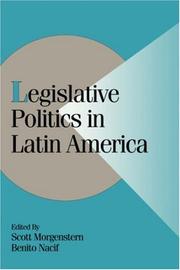
By Scott Morgenstern
"Using the United States as a basis of comparison, this book makes extensive use of roll-call data to explore patterns of legislative politics in Argentina, Brazil, Chile, and Uruguay. The patterns are defined by the extent to which parties, factions, delegations, or alliances - what the author collectively terms 'legislative agents' - are unified in their voting and hence are collectively identifiable to voters as being responsible for policy decisions. Then, to develop an indicator of the second central pattern, the book examines the propensity of the legislative agents to form policy coalitions with one another. It shows that agents in Chile and to some extent Uruguay are more coalitional than in Argenta and Brazil, but there is evidence that the agents work with one another in these latter countries as well. The U.S. parties have exhibited an important shift, moving from low levels of unity and frequent bipartisanship toward considerably higher levels of unity and more frequent polarization. In explaining patterns, the book considers the effects of the electoral system, legislators' ideology, cabinet membership, and other variables."--Jacket.
Published
November 3, 2003
Format
Hardcover
Pages
238
Language
English
ISBN
9780521820561