




The BiblioNest. Curate your collection, your way.
© 2026 Ann Mathenge · Built with love, coffee, and cat hair.

Loading...

© 2026 Ann Mathenge · Built with love, coffee, and cat hair.



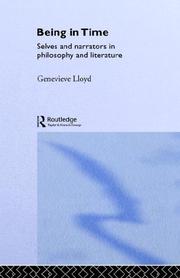
By Genevieve Lloyd
In this lucid and elegantly written book, Genevieve Lloyd reads Spinoza's philosophy as a profound articulation of ideas of individuality, selfhood, and freedom. Focusing on Spinoza's Ethics, Lloyd illuminates as well his transformation of Descartes's concepts of substance, mind, and body, and the relations between Spinoza's metaphysics and his ethical views.
Spinoza's doctrine of the uniqueness of substance has been interpreted as absorbing individual self-consciousness into an all-embracing whole.
Here, Lloyd addresses the dilemmas posed by the Cartesian legacy of what it means to be a self: the sense of isolation of a contained intellectual substance trying to establish contact with an "external" world, the limitations of an idea of knowledge that sharply distinguishes between reason and the passions, problems in thinking about time and mortality in ways that allow no middle ground between an afterlife and annihilation, and tensions in ideals of personhood that claim to transcend sexual difference.
Throughout, Lloyd emphasizes the ethical importance of Spinoza's metaphysics. Out of his treatment of substance and its modes emerge new ways of thinking about self-consciousness, freedom, gender difference, the passions, and time. As the influence of Descartes wanes, Lloyd suggests that Spinoza's philosophy may help us rethink some of the most troubling issues surrounding our understanding of the self.
Published
1994
Format
-
Pages
182
Language
English
ISBN
0801429994