
The BiblioNest. Curate your collection, your way.
© 2026 Ann Mathenge · Built with love, coffee, and cat hair.

Loading...





© 2026 Ann Mathenge · Built with love, coffee, and cat hair.



By Aaron B. Wildavsky
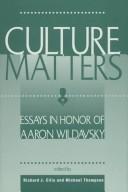
These essays use a common interpretive framework to show how economic and other concepts are socially constructed, how political philosophers and the workings of democracy can be understood, and how rational choice theories might be given wider application and greater discriminatory power.
Aaron Wildavsky hoped that fellow social scientists would be persuaded of the unifying and integrating potential of what Mary Douglas called "grid-group theory" (which he further developed as "cultural theory") by seeing this explanatory tool used in so many different ways and with regard to such a variety of issues and questions.
In the first section, Wildavsky argues that concepts such as externalities, public goods, altruism, and even risk and rape, are constructs of rival, ubiquitous societal subcultures engaged in a perpetual interpretive and political struggle with one another. In the second section, he shows how his own cultural constructs and concepts can be used to understand the competing human objectives of normative and analytic political philosophers, including Thomas Hobbes and John Stuart Mill.
In the third section, Wildavsky suggests how his cultural ideas might be combined with those of rational choice theorists by adding a theory of preference formation and ultimate objectives to their theories of efficient preference realization and instrumental rationality.
Published
1997
Format
-
Pages
-
Language
English
ISBN
1560002751