




The BiblioNest. Curate your collection, your way.
© 2026 Ann Mathenge · Built with love, coffee, and cat hair.

Loading...

© 2026 Ann Mathenge · Built with love, coffee, and cat hair.



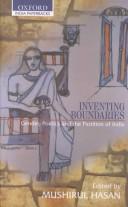
By Mushirul Hasan
This book is about the 'destiny of India's Muslims', more than 110 million of them. It covers, in the early chapters, the origins of Muslim separatism under the British, the making of the partition of India and its meaning for a host of Muslim communities, families and individuals.
Chapter 5 examines the establishment of the 'Nehruvian consensus' in the 1940s and 1950s with its secular vision for India's future, and Chapter 6 attempts to delineate secular identities and the Muslim organisations that ran counter to this process. Chapter 7 illustrates the role of Aligarh Muslim University and Jamia Millia Islamia as the bearers of the 'beacon lights' of modern and secular understandings of the Muslim future in India. The following chapter examines the breakup of the Nehruvian consensus from the 1960s through to the 1990s, looking in particular at the reasons for the growth of communal activity and the retreat of both Muslims and Hindus into communal political camps.
The final section of the book surveys the state of India's Muslims in the period after 6 December 1992, when the Babri Masjid was demolished. The argument is that Muslim religious and political leaders have failed. There still exists a secular platform, if somewhat narrowed; secular Indian Muslim intellectuals must stand up and be counted on that platform, and take a lead.
The author speaks with a moderate and secular voice, and his distinctive contribution needs to be widely heard both inside and outside India.
Published
1997
Format
-
Pages
383
Language
English
ISBN
0813333393