




The BiblioNest. Curate your collection, your way.
© 2026 Ann Mathenge · Built with love, coffee, and cat hair.

Loading...

© 2026 Ann Mathenge · Built with love, coffee, and cat hair.



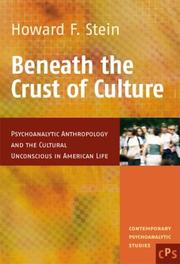
By Howard F. Stein, Robert F. Hill
Why do Oklahomans have such a strong sense of identity as Oklahomans, and how did they come by it? This book describes how Oklahomans perceive themselves and how others outside the state view them. in delineating the boundaries and content of what is distinctively Oklahoman, this book establishes Oklahoma as a bona fide cultural state of mind. It shows how a geographic region can possess its own distinctive meaning system, one that simultaneously contributes to and is.
Mirrored in the larger national image. Contributors to this volume trace and interpret many pieces of the Oklahoman identity. After the foreword and the editors' introduction, Gary L. Thompson describes the geographical stage upon which that identity is played out; Howard R. Lamar explores Oklahoma's origin myths; James M. Smallwood and Crispin A. Phillips describe the history of blacks in Oklahoma; Donald N. Brown examines three of Oklahoma's ethnic groups; Robert F.
Hill, Glenn W. Solomon, Jane K. Tiger, and J. Dennis Fortenberry analyze the health behaviors of rural adolescents, including Native Americans; Charles W. Nuckolls discusses the lives of people who personify the Oklahoma identity; J. Neil Henderson investigates the boom-and-bust economic cycles of one Oklahoma community; Berry W. Tramel studies the meaning of sports in the state; Arn Henderson describes the significance of Oklahoma architecture; Pat Bellmon writes about.
The character of Oklahoma's wheat farming and cattle ranching communities; and in conclusion the editors use these themes to explore in depth Oklahoma's internal and external images. Although the book focuses on Oklahoma and its identity, it is also about learning to perceive, to describe, to understand any group identity system, not only the more familiar ones. Thus, it is written not only for Oklahomans and those interested in the state, but for scholars and other.
Professionals who work in a wide variety of corporate, political, or organizational settings and wish to understand their cultures better.
Published
1993
Format
-
Pages
264
Language
English
ISBN
0806124989