
The BiblioNest. Curate your collection, your way.
© 2026 Ann Mathenge · Built with love, coffee, and cat hair.

Loading...

© 2026 Ann Mathenge · Built with love, coffee, and cat hair.



By Jane M. Everson
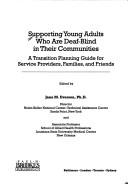
This comprehensive guide describes how to secure the necessary supports - optimal health care, enhanced communication skills, and improved orientation and mobility - and encourages those involved in the transition process to move beyond traditional options. Detailed chapters and numerous case studies illustrate how to explore shared and consumer-owned housing, assess individual job skills, network for employment, expand recreation and leisure activities and create opportunities for community inclusion.
Administrators, families, and others will use this comprehensive handbook to help individuals who are deaf-blind have a broader range of experiences and gain greater independence.
For individuals who are deaf-blind, decisions made during the transition from school to adult life establish how they will live, work, and spend their leisure time. Because the abilities and preferences of young adults who are deaf-blind vary dramatically, this unique resource stresses the importance of focusing transition efforts on the individual.
By using person-centered planning, service providers and family members can incorporate an individual's strengths, needs, and goals into a blueprint for life in the community.
Published
1995
Format
-
Pages
352
Language
English
ISBN
1557661618