


The BiblioNest. Curate your collection, your way.
© 2026 Ann Mathenge · Built with love, coffee, and cat hair.

Loading...

© 2026 Ann Mathenge · Built with love, coffee, and cat hair.



By Hans Lambers
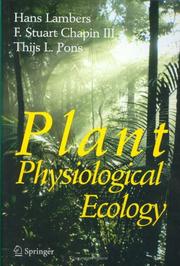
"The growth, reproduction, and geographical distribution of plants are profoundly influenced by their physiological ecology: the interaction with the surrounding physical, chemical, and biological environments. This textbook describes mechanisms that underlie plant physiological ecology at the levels of physiology, biochemistry, biophysics, and molecular biology. At the same time, the integrative power of physiological ecology is well suited to assess the costs, benefits, and consequences of modifying plants for human needs and to evaluate the role of plants in ecosystems.
Plant Physiological Ecology, Second Edition is significantly updated, with full color illustrations and begins with the primary processes of carbon metabolism and transport, plant water relations, and energy balance. After considering individual leaves and whole plants, these physiological processes are then scaled up to the level of the canopy. Subsequent chapters discuss mineral nutrition and the ways in which plants cope with nutrient-deficient or toxic soils. The book then looks at patterns of growth and allocation, life-history traits, and interactions between plants and other organisms. Later chapters deal with traits that affect decomposition of plant material and with the consequences of plant physiological ecology at ecosystem and global levels."--pub. desc.
Published
2008
Format
-
Pages
604
Language
English
ISBN
9780387783406