


The BiblioNest. Curate your collection, your way.
© 2026 Ann Mathenge · Built with love, coffee, and cat hair.

Loading...

© 2026 Ann Mathenge · Built with love, coffee, and cat hair.



By Robert Picciotto
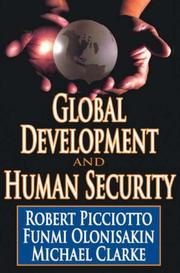
"All United Nations heads of state have endorsed the Millennium Development Goals, which aim to reduce the incidence of absolute poverty by half by 2015. To reach those goals, growth in developing countries will have to be twice the levels achieved in the 1990s for the next fifteen years. This will require, at the least, new rules of the development game. At present, rich countries exercise control over the institutions that oversee the global economy." "This volume addresses a curiously neglected area of policy analysis - the impact of rich countries' policies on the global poor. Four-fifths of the world's people subsist on one-fifth of the world's income. One-fifth live in abject poverty, on less than one dollar a day. The main responsibility for reducing poverty reduction naturally rests with developing countries. But globalization means that rich countries must also play their part. Industrialized countries dominate global environmental management through the heavy ecological footprint of their production and consumption patterns." "At current levels, aid alone cannot deliver adequate progress towards the Millennium Development Goals. The surveys by eminent development analysts and practitioners included in this volume sketch a road map for a better understanding of the mechanics of globalization and the improved design of development policies."--BOOK JACKET.
Published
May 14, 2004
Format
Hardcover
Pages
319
Language
English
ISBN
9780765802361