
The BiblioNest. Curate your collection, your way.
© 2026 Ann Mathenge · Built with love, coffee, and cat hair.

Loading...

Korea's Political Economy

Financing economic integration and functional cooperation for Northeast Asia
Institutional and policy reforms to enhance corporate efficiency in Korea

Fertility Transition of the East Asian Populations (Monographs of the Center for Southeast Asian Studies, Kyoto Univ : Eng Lang Ser No, 13)
© 2026 Ann Mathenge · Built with love, coffee, and cat hair.



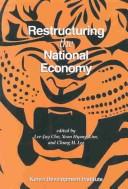
By Lee-Jay Cho, Yoon Hyung Kim
Over the past three decades, South Korea has moved along a path of strong economic growth and political democratization, attracting worldwide attention and providing valuable lessons for other developing economies. Yet Korea still must grapple with many intractable problems fueled by its rapid industrialization and uneven growth, including unbalanced distribution of wealth, concentrated economic power, and adversarial relationships between management and labor.
Within the context of these sweeping changes, this volume explores options for economic and social institutional reform in Korea.
Drawing on models of economic development from Japan, the United States, and Europe, distinguished Asian and Western scholars relate the experiences of previously industrialized economies to each facet of Korea's economic system, including national management; taxation and banking; land ownership and use; trade and industrial strategy; and relations among business ownership, management, and labor.
In so doing, the contributors provide valuable insights and fresh proposals for a viable model of social and economic modernization.
Throughout the volume, the contributors emphasize the importance of Korea's cultural heritage - not only in explaining the nation's recent growth but also as a key element of its continued success. By providing an overview of the evolution and interaction of Korean economic, political, and sociocultural institutions, the contributors make clear how these structures mediate the movement between cultural values and economic progress.
Published
1994
Format
-
Pages
727
Language
English
ISBN
0813388597