
The BiblioNest. Curate your collection, your way.
© 2026 Ann Mathenge · Built with love, coffee, and cat hair.

Loading...

© 2026 Ann Mathenge · Built with love, coffee, and cat hair.



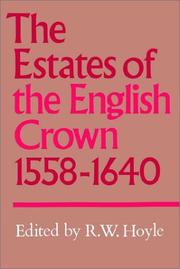
By R. W. Hoyle
This collection of essays is the first full account of the largest estate in early modern England, against which the fortunes of all other estates may be judged. Previous accounts have tended to regard the Crown lands as a resource to be plundered by successive monarchs in times of need: much of the monastic land confiscated by Henry VIII had been sold by the time of his death, and the estates had mostly been liquidated to meet the demands of expenditure by 1640.
It is not denied in these essays that the estates suffered from the attrition of periodic sale, but the estates are here seen as a continuing enterprise of complexity and sophistication. The volume looks sympathetically at the problems of administering estates quite different in scale to any others in England, and attempts to show how what has often been seen as weak management on the Elizabethan estates was a reasonable response to insurmountable difficulties.
What emerges more generally is a sense not only of endeavour but also of failure. Each essay is concerned with the dialogue between the Exchequer and its local administrators and tenants. The success and failure of initiatives launched by the Exchequer is illustrated by examples drawn from many communities throughout England.
The essays draw on a wide range of sources to explain why the estates could never satisfy the demands placed on them and how the problems of tenurial reform identified here were far from unique.
Published
1992
Format
Hardcover
Pages
440
Language
English
ISBN
9780521360821