




The BiblioNest. Curate your collection, your way.
© 2026 Ann Mathenge · Built with love, coffee, and cat hair.

Loading...

© 2026 Ann Mathenge · Built with love, coffee, and cat hair.



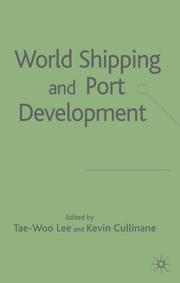
By Kevin Cullinane
A port (or seaport) is a place that provides for the vessel transfer of cargo and passengers to and from waterways and shores. Port economics us concerned with the economics of port services. Users of port services are those that utlize the port as part of the transportation process of moving cargo and passengers to and from origin and destination locations. Users include transportation carriers such as shipping lines, railroads and trucking firms that perform these movements and shippers and individuals that provide the cargo and themselves as passengers to be transported. Port users demand port services, whereas port service providers such as the port terminal operator supply port services to port users. Port economics and shipping economics comprise the branch of economics known as maritime economics. This volume provides original contributions to the study of port economics: the evolution of port economics; economic theories of the port, port cost functions and port investment; and empirical evidence on the relative efficiency of ports, the immpact of ports on international maritime transport costs, the competitiveness of ports and the impact of deregulation on dockworker wages.
Published
August 16, 2006
Format
Hardcover
Pages
260
Language
English
ISBN
9780762311989