


The BiblioNest. Curate your collection, your way.
© 2026 Ann Mathenge · Built with love, coffee, and cat hair.
© 2026 Ann Mathenge · Built with love, coffee, and cat hair.



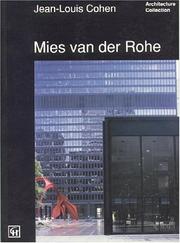
By Jean-Louis Cohen
Le Corbusier's arrival in the USSR in October 1928 to build the Moscow headquarters for Centrosoyuz created an international sensation in both the artistic and political communities: finally the crusader of "machine-age architecture" was going to encounter this seemingly modern nation whose economy and culture were in the making. Viewing the Soviet Union as a "factory for blueprints," where his role as an international expert would at last be recognized, Le Corbusier.
Soon met with disappointment. Soviet authorities rejected his urban plan for Moscow, which laid the groundwork for the "Ville Radieuse" (1930) and included designs for the 1932 Palace of Soviet competition. In this detailed, colorful account of the vicissitudes of Le Corbusier's Soviet adventure, translated from the French, Jean-Louis Cohen brings to light a whole cycle of transformations in the architect's project and design strategies while providing new.
Interpretations of Soviet avant-garde culture. It was the USSR, Cohen maintains, that furnished Le Corbusier with one of his greatest sources of artistic inspiration and with an ideological pretext for the extraordinary and often frenzied assertion of his ambitions. All the leading Soviet intellectuals and architects of the period--llya Ehrenburg, Sergei Eisenstein, Moisei Ginzburg, El Lissitzky, and Alexander Vesnin--play major roles in this chronicle of hope and.
Disillusion. Heretofore unpublished drawings and texts illuminate controversies surrounding Le Corbusier's urban doctrine in the face of Soviet "disurbanization" and his violent opposition to the early stages of Stalin's socialist realism.
Published
1992
Format
-
Pages
254
Language
English
ISBN
0691040761