
The BiblioNest. Curate your collection, your way.
© 2026 Ann Mathenge · Built with love, coffee, and cat hair.

Loading...









© 2026 Ann Mathenge · Built with love, coffee, and cat hair.



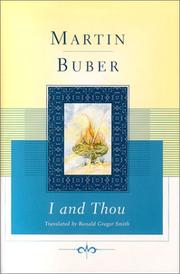
By Martin Buber, Carl Gustav Jung
"Biblical in origin, the expression "eclipse of God" refers to the Jewish concept of 'hester panim', the act of God concealing his face as a way of punishing his disobedient subjects. Though this idea is deeply troubling for many people, in this book Martin Buber uses the expression hopefully — for a hiding God is also a God who can be found. First published in 1952, 'Eclipse of God' is a collection of nine essays concerning the relationship between religion and philosophy. The book features Buber's critique of the thematically interconnected—yet diverse—perspectives of Søren Kierkegaard, Hermann Cohen, C. G. Jung, Martin Heidegger, and other prominent modern thinkers. Buber deconstructs their philosophical conceptions of God and explains why religion needs philosophy to interpret what is authentic in spiritual encounters. He elucidates the religious implications of the I-Thou, or dialogical relationship, and explains how the exclusive focus on scientific knowledge in the modern world blocks the possibility of a personal relationship with God. Featuring a new introduction by Leora Batnitzky, 'Eclipse of God' offers a glimpse into the mind of one of the modern world's greatest Jewish thinkers."--Back cover.
Published
1977
Format
-
Pages
192
Language
English, German
ISBN
083719718X